Ahead of this week’s Fruitnet Tomato Congress, we speak with Marie Vendercoille, tomato crop portfolio lead at Gautier Semences
Where is your focus when it comes to developing your tomato portfolio?
Marie Vendercoille: Our priority is to develop increasingly well-rounded varieties capable of simultaneously addressing the plant health, agronomic, economic and climatic challenges faced across different markets.
Resistance to ToBRFV has profoundly reshaped breeding programmes in recent years. Our objective is now to incorporate this resistance while maintaining the qualities that make a variety valuable: marketable yield, ease of crop management, consistency, fruit quality and taste.
We are also strengthening our focus on stable performance under increasingly variable climatic conditions. We continue to develop differentiated products, particularly in the small-fruited, coloured tomato and distinctive flavour segments.
Taste remains at the heart of our breeding approach. We carry out extensive work to characterise the aromatic profiles of our varieties, ensuring that the flavour qualities that define their identity are preserved, even when introducing new resistances.
Which are your most exciting new varieties, and why do they stand out?
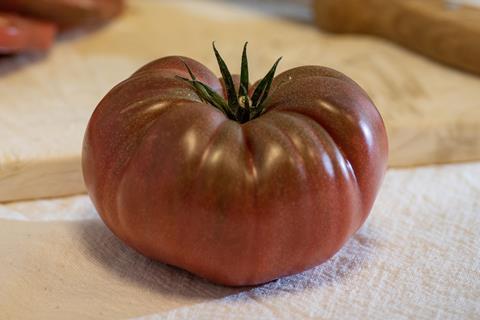
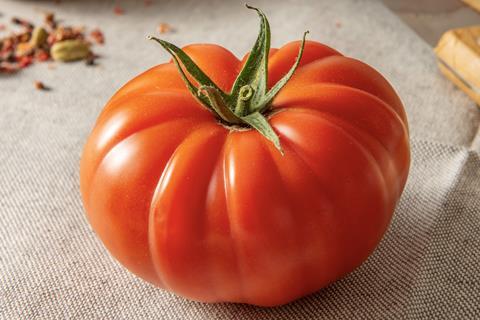
MV: Among our recent developments, Marmoka, a black ribbed tomato, and Marbria, a red ribbed tomato, are particularly representative of our approach. Both varieties offer high resistance to ToBRFV.
Marmoka stands out for its high and consistent marketable yield, good plant vigour, even under hot conditions, and uniform fruits weighing 250–300g. Its deep black colour, melting and juicy texture, and pronounced aromatic intensity preserve the distinctive characteristics expected of this tomato type.
Marbria combines earliness, consistent production and good fruit-setting ability. It also produces ribbed fruits weighing 250g–300g, with a particularly melting and juicy texture and good aromatic intensity.
These two varieties illustrate our commitment to incorporating resistance without compromising fruit quality or taste. This ambition is also reflected in comparative sensory evaluations. Analysis carried out on Marmoka and Marbria allow us to characterise their texture, juiciness and aromatic intensity, and to compare their sensory profiles with those of established reference varieties appreciated by consumers.
How much focus is given to resistance and resilience?
MV: Both are now central to our breeding programmes. ToBRFV pressure varies from one region to another, but crop security is a major priority across most markets. However, resistance alone does not make a successful variety.
We therefore aim to develop broader resilience, addressing not only disease pressure but also temperature fluctuations and different growing environments. The periods of extreme heat experienced in recent seasons have particularly highlighted the importance of characteristics such as fruit setting, plant balance, fruit size uniformity and the ability to maintain fruit quality.
In addition to resistance, what are the other traits you must consider?
MV: Expectations vary between markets, but also across the different players in the supply chain. For growers, consistent production, reliable fruit setting, marketable yield and ease of crop management are essential.
For supply chain operators and retailers, uniform fruit size, appearance and shelf-life are key criteria, with requirements that can vary significantly depending on the destination and distribution channel. For consumers, taste, texture, appearance, convenience and product diversity remain decisive factors.
The complexity of our work lies in bringing all these expectations together within a single variety, while taking into account the specific characteristics of each market.
What trends or changes are you experiencing across the global tomato market?
MV: There is no single global tomato market. Tomato types, consumption habits and distribution channels vary considerably from one country to another.
Alongside traditional tomato types, consumers now have access to a very wide choice of shapes, colours, sizes and uses. Small-fruited tomatoes, particularly cherry tomatoes, play an important role in many markets, notably thanks to their convenience and the immediate eating pleasure they offer. At the same time, there is still strong demand for tomatoes with a distinctive identity, whether ribbed, coloured or differentiated by their appearance or flavour.
This diversity is essential. Our role is not to standardise markets, but to offer varieties suited to their specific needs.
What needs to be done for the tomato business to grow further in the coming years?
MV: We must continue to create value at every stage of the supply chain. For growers, this means offering varieties that provide greater crop security, consistent performance and economic profitability. For supply chain operators and retailers, it means delivering consistent quality and a product range adapted to the diversity of markets and uses. For consumers, we must continue to make tomatoes appealing through a diversity of shapes, colours and types, but above all through the pleasure of eating them.
We believe the sector’s ability to combine performance, resilience, diversity and taste will be crucial to its future.
Tomatoes perfectly illustrate the growing complexity of modern plant breeding: disease resistance, climate adaptation, yield, ease of production, shelf-life, appearance, taste and more.
We firmly believe that this complexity should not lead to a standardisation of the offer. On the contrary, varietal innovation must make it possible to secure production while preserving the diversity, identity and flavour qualities of tomatoes. Beyond agronomic performance, the pleasure of eating tomatoes is also what creates lasting value in our product range.
Click here to register for Fruitnet Tomato Congress, which takes place in Granada on 5-6 November