The cutting-edge system is now being used in 50 per cent of the tabletop strawberries grown in Flanders
A group of Belgian strawberry growers has discovered a sustainable way to fight pests and diseases using light instead of chemicals.
Berries are fragile and highly susceptible to powdery mildew, a persistent fungal disease, and up to now, protecting harvests has meant relying on chemical treatments.
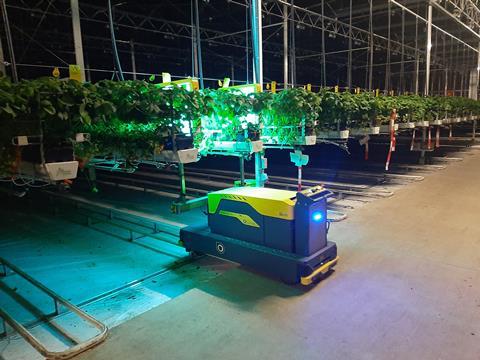
But in Belgium, growers are using state-of-the-art autonomous UV-C (Ultraviolet-C) robots to protect strawberry plants. The machines move autonomously through the greenhouses overnight, using ultraviolet light to neutralise fungi before they can spread.
The industry has successfully transitioned from research trials in 2017 to full commercial implementation this season and the robots are currently being rolled out on a large scale across Belgium’s strawberry sector.
“As of March 2026, 40 per cent of Belgian strawberry growers are already making use of this technology. This covers approximately half of the relevant tabletop strawberry cultivation area. The capacity has doubled from last year until now, so this is becoming a core part of our infrastructure,” said Nele Van Avermaet, marketing manager fruit and vegetables at Vlam.
By treating the plants overnight, growers said they have achieved up to an 80 per cent reduction in fungicide use. Combined with the use of beneficial insects to control pests naturally, the robots have halved the number of protection products required, resulting in a cleaner, more robust fruit.
“Since we started using the UV-C robots, the difference in the greenhouse is visible every morning,” said one grower from Coöperatie Hoogstraten. “We are no longer relying on chemical use; so, the plants remain strong. We have noticed first-hand that the harvest has a much more vigorous appearance and a notably glossy finish.
“For us, it’s not just about efficiency, it’s about delivering a strawberry that looks and tastes exactly how a premium berry should, and there is a peace of mind that it was grown sustainably.”
Growers say the new technology will ensure that Belgian strawberries reach retailers this season in better condition. With British appetite for strawberries extending well beyond the brief local season, imports from Europe are key to cover demand. “Flanders’ geographical proximity to the UK, just across the Channel, minimises the time for the Belgian harvest to reach our shelves,” said Gary Marshall from Bevington Salads. “This means their strawberries are the next best thing after our own national production, being as natural and fresh as you can get. Even while we wait for our own local peak, every day can be a good day for a strawberry!”