NZKGI and Zespri will deliver ‘Optimising Kiwifruit Land Use – More from Less’, co-funded through the government’s Primary Sector Growth Fund
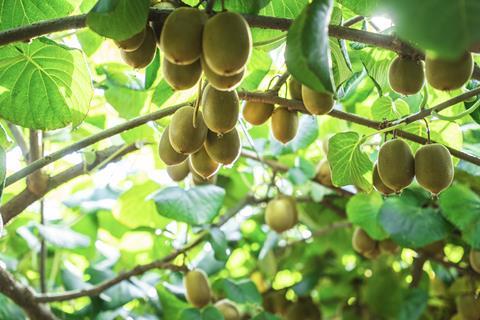
The New Zealand kiwifruit industry has welcomed government co-investment in a new five-year programme that aims to produce higher yields in a more efficient and sustainable manner.
New Zealand Kiwifruit Growers (NZKGI) and Zespri said that they would deliver something titled ’Optimising Kiwifruit Land Use – More from Less’, a project which is co-funded through the government’s Primary Sector Growth Fund, contributing NZ$19.14mn.
The kiwifruit industry and Zespri will contribute a further NZ$28.73mn combined cash and in-kind investment.
The programme will operate across all New Zealand kiwifruit growing regions and varieties to grow more value from existing orchards with on-orchard innovation, advanced decision-support tools, and applied science.
According to a statement, the project’s three workstreams focus on more orchard productivity, more efficient use of resources, and less environmental impact.
It will be overseen by an independently chaired Project Governance Group, with representation from MPI, NZKGI and Zespri.
NZKGI chief executive Colin Bond said his organisation is supportive of initiatives which help food and fibre producers lift productivity and returns, and maximise efficient use of scarce resources.
Zespri CEO Jason Te Brake confirmed that the kiwifruit industry is pleased to work alongside the government on the Optimising Kiwifruit Land Use – More from Less project.
“New Zealand sells high-quality, great-tasting Zespri kiwifruit in more than 50 markets around the world each year, and we continue to see strong demand from for customers and consumers for our fruit,” Te Brake outlined.
”We expect to more than double our exports over the next ten years through releasing new cultivars, developing more orchards and importantly maximising productivity on existing orchards and doing this in a way which is good for people, communities and the environment.
“This programme will support growers to improve their orchard performance and production, while strengthening the value of our kiwifruit exports to meet the strong market demand for our premium products,” he continued.
”Our industry has a strong history of being forward-looking, innovative and collaborative and co-investment of this kind helps bring innovation to growers much faster than we could on our own.
Te Brake pointed out that the country had an opportunity to take forward steps given the quality of production in New Zealand.
”However, we’re also working within some real constraints,” he warned. ”There’s only so much suitable land in the right climates, with production sitting alongside increasing environmental expectations and climate variability.
“Kiwifruit has a relatively low environmental impact and we’re committed to always looking at ways we can do better.
”The opportunity for us is in getting more from the orchards growing now through more precise growing practices, better decision-making tools, and continuing to bring new science into our orchards to improve production as well as delivering new varieties which grow at higher yields in a wider variety of locations,” Te Brake commented.
“Kiwifruit already delivers significant value back to New Zealand’s regions and rural communities each season – NZ$3.6bn in direct grower returns last season – and this programme will build on that, supporting further value back to growers, shareholders and the wider economy.”