New campaign by British Berry Growers promotes berries in out-of-home spaces typically used by fast food, and calls on government to extend TV ban
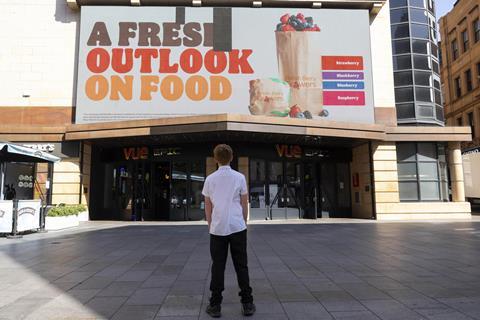
The berry industry is joining calls for the government to extend a ban on junk food advertising from TV to out-of-home advertising to help improve children’s diets.
Strict limits on the promotion of food and drink products high in fat, salt, or sugar (HFSS) currently apply to TV aired before 9pm and paid online advertising, but do not extend to spaces including bus shelters, billboards and digital screens.
A new campaign from berry trade body, British Berry Growers, is highlighting the issue by installing parody adverts inspired by fast food companies.
Displayed in the same outdoor spaces typically used to promote HFSS products, the adverts replace burgers, fries and fried chicken with berry promotions.
The campaign, called a ‘Fresh Outlook on Food’, is backed by TV presenter Kate Quilton, and Dev Sharma, former youth MP and founding youth board member of Bite Back, which campaigns for healthier school food and fairer advertising.
“The rules have changed online and on television, but the moment children step outside, the old rules still apply,” said BBG chair Nick Marston.
“Children are surrounded by marketing for fast food and HFSS products, while healthy foods such as berries are almost invisible in the outdoor advertising landscape.”
Research from the Food Foundation has found junk food companies are shifting advertising spend from screens to out-of-home options after the watershed ban came in.
It comes as new research, commissioned by British Berry Growers (BBG), found nine in ten parents saying their child is exposed to junk food adverts during the school run.
Three in five parents said they are concerned about their child’s exposure to junk food advertising, with around two thirds saying the ads actively undermine the healthy eating habits at home.
“Foods like berries are packed with fibre, vitamins and antioxidants and can play an important role in a healthy, balanced diet,” continued Marston.
“Children deserve to see more of those positive food choices promoted in the places they live, learn and travel through every day,” he said.
The campaign comes alongside growing concern around childhood obesity. Almost a quarter of children are now overweight or obese by the time they start primary school, according to the Department of Health and Social Care.
“Parents are trying their best, but we’re competing with powerful marketing messages everywhere our children go,” said Quilton.
“If we believe these adverts shouldn’t be shown to children online or before 9pm on television, it makes little sense that they’re still allowed to dominate our high streets.”
Bite Back’s Fuel Us Don’t Fool Us: Advertising report found fast food adverts are deliberately targeting more deprived areas. On average, the rate of McDonald’s adverts was nine times greater in the most deprived areas, compared to their more affluent counterparts.
“When the government’s new restrictions on junk food advertising came into force earlier this year it was rightly celebrated as a landmark moment for children’s health,” said Sharma.
“But they don’t go far enough. The rules for TV screens should now apply to the streets,” he said.