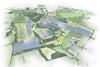
The £150mn Rivenhall Greenhouse project has received the go-ahead from council planners and is described as a blueprint for future glasshouses to be co-located with complementary industrial sites

A major glasshouse complex has received final planning approval and paved the way for one of Europe’s largest low-carbon Controlled Environment Agriculture (CEA) sites and a blueprint for energy efficient horticulture.
The £150 million Rivenhall Greenhouse project received planning consent from Essex County Council this week in a move welcomed by developers and the glasshouse industry as a step forward for UK food security.
The site is located next to a waste incinerator, the Indaver Integrated Waste Management Facility, through which the greenhouse will source approximately 90 per cent of its heat, alongside all of of its electricity and a sustainable supply of CO2 for crop growth.
As such, developers say the project is a new model for British horticulture co-located with energy infrastructure, to deliver consistent, year-round supply with significantly lower carbon intensity.
The circular economy approach provides a more stable and predictable energy cost base than conventional UK and European greenhouse operations, at a time when rising standing charges, and energy market volatility are placing increasing pressure on traditional production.
“Rivenhall offers a materially different approach: large-scale domestic production, insulated not only from seasonal and geopolitical disruption, but also from the full impact of wholesale energy market fluctuations,” a statement read.
At full capacity, the site could produce up to 30,000 tonnes of tomatoes annually, equivalent to around 7.5 per cent of current UK imports, and could also grow cucumbers, peppers or strawberries.
“A further pipeline of five comparable large-scale CEA developments has been identified across the UK. However, delivery at scale will depend on a more supportive policy environment, including financial incentives, planning reform and recognition of CEA (along with sovereign food production) as a strategically important component of national infrastructure and a Frontier Industry within the UK’s emerging Industrial Strategy,” the statement continued.