Access to labour, water security, crop protection and the government’s Horticulture Sector Plan were on the agenda in the production and politics panel at Festival of Fresh
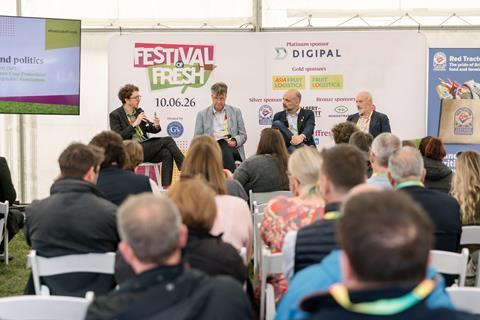
The changing political climate of the country could have implications for seasonal worker negotiations and the availability of labour, according to industry leaders at today’s Festival of Fresh event.
That was one of the messages from a wide-ranging panel discussion on production and politics, where speakers raised concerns from water supplies to crop protection.
Chair of the NFU’s horticulture and potatoes board, Martin Emmett, told delegates that the industry needs to “get that message across about how vital seasonal workers are to our sector”, in context of Labour facing a leadership crisis and the broader change in political dynamics within the country.
“The political climate in this country is changing, and that I think is something we need to face into very directly when we think about our seasonal worker requirement. How challenging would that be?” he said.
Low confidence to invest was a common theme across the panel, with Emmett warning that UK produce companies face “unique taxation”, from the cost of Biodiversity Net Gain to rising standing charges.
“It’s very hard work to invest and that’s a reflection of a wider issue in confidence. Confidence has taken a beating,” he said. “There is a lack of material evidence from this government that food security is national security. We don’t see the actions that underpin that,” he added.
Following a last-minute cancellation by Defra farming minister, Dame Angela Eagle, who had been due to give the keynote political address, panellists sketched out the industry’s asks for the upcoming Horticulture Sector Growth Plan.
Simon Conway, chair of Horticulture Crop Protection (HCP), said the industry needs “action not writing” to come from the plan, while confirming his association, as well as the NFU and the newly-formed UK Fruit and Veg Association (UKFVA) are working with the government to submit evidence and help shape the plan.
In terms of crop protection, Conway said the industry is “hanging on” but warned the upcoming SPS agreement and reset deal with the EU “could immediately disadvantage” UK growers, if they are unable to access the larger toolkit of products currently available in Europe.
Spokesperson for the UKFVA, Chris Rose, said the industry does need some form of replacement to the Producer Organisation funding, after final payments from 2025 come to an end.
“We do need more than switch on, switch off grants, they don’t work for horticulture,” he said. “It doesn’t need to be a whole bunch of new money. There’s a large amount in the Defra pot, with a bit of prioritising, horticulture isn’t asking for a huge amount.”
Water was another topic of concern, with chairman of G’s, John Shropshire, revealing the company has been delayed in building a new 700mn cubic metre reservoir after being unable to obtain planning permission, and what he described as “incompetence” by planning authorities.
“We all need to prepare ourselves for a scenario when we do not actually have security in supplies,” said Emmett. “There is not going to be permanent licensing anymore and we need to actively prepare. We have to invest in reservoirs, harvesting and application technologies. Speaking of capex, ths is one of the areas we need that extra support.”
Ending the panel on a positive note, all three panellists pointed to the potential of AI to transform the industry, from data management to fast-tracking plant genomics, as well as the next generation of young people who are keen to enter the sector through graduate and other training programmes.