Growers in Sicily and Sardinia report extensive damage to citrus, artichokes and vegetables after torrential rainfall and high winds in recent weeks
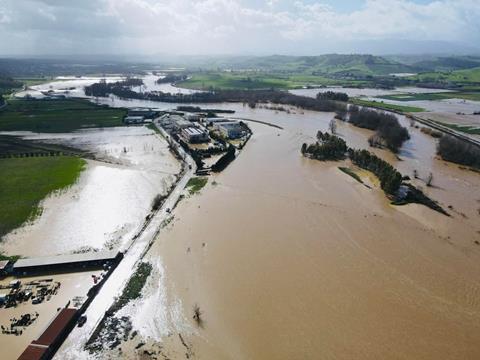
Southern Italy’s fresh produce sector has been left reeling after extreme weather caused irreversible damage to a number of key crops, including citrus, artichokes, and leafy vegetables over the past month.
In Sicily and Sardinia, as well as parts of the mainland including Calabria, growers have reported extensive disruption as a result of high winds and intense rainfall, notably during a cyclone dubbed Storm Harry, which have led to flooding and damage to rural infrastructure.
As reported by Italiafruit, storms in Sicily’s Conca d’Oro region around Palermo destroyed mandarins, artichokes, lettuce, and cime di rapa, with greenhouses and coverings reportedly ripped apart and fields apparently left unusable.
Producers said the summer season was already compromised, and they were trying to “save what’s left”.
State of emergency
For the Sicilian citrus business, it’s a heavy blow. Winds of up to 100 km/h caused fruit to drop, prompting emergency action to collect any salvageable fruit.
But industry figures reported that as much as half of the citrus crop – especially oranges – had been lost, with fruit hitting the ground hard or submerged in mud and water.
“The recent adverse weather conditions have devastated entire agricultural areas and destroyed citrus groves throughout Sicily: from the province of Catania to those of Syracuse and Ragusa and, equally dramatically, also the provinces of Agrigento, Enna and Palermo,” said regional citrus representative Giosuè Arcoria as he called for the government to declare it a natural disaster, in a letter to Italy’s minister of agriculture, Francesco Lollobrigida.
“The damage is extensive and widespread throughout the entire Sicilian agricultural sector and is particularly severe for the citrus fruit sector (affected by fruit drop and mould), which has suffered estimated losses ranging from a minimum of 40 per cent to 100 per cent of production in some areas, as most of the citrus fruits were still on the trees at the time of the disaster.”
Fruitimprese Sicilia president Placido Manganaro said the association would do “everything possible” to ensure that Italians could find Sicilian produce on their shelves – “especially oranges, which have always been the pride of our region””.
Structural damage
Speaking to Italiafruit, president of the Valle dell’Oreto Cooperative Paolo Marcenò described the damage as “painful”.
The group has grown medlars, bananas, and vegetables in the area near Paletmo for almost a century.
“After Harry, further waves of bad weather have worsened an already dramatic situation,” he told the publication. “Our medlar trees were all in full bloom, and not a single flower was left; in some areas, production has been reduced to zero.”
As for bananas, more than 500 plants were reportedly damaged and roofs were stripped off greenhouses. “And we can’t even proceed with the planting we had planned: the damage to production is compounded by the structural damage.”
Sardinia also affected
The bad weather has also struck Sardinia’s vegetable sector hard. There, torrential rain and strong winds caused flooding in Cagliari, Campidano, and Sulcis that is understood to have choked the roots of various vegetable plants including artichokes.
Field infrastructure, irrigation and rural access roads were also compromised, complicating both immediate harvesting and longer-term planning.
“The exceptionally severe weather that has affected large portions of southern Sardinia… lashed by heavy rains and strong gusts of wind, has seriously compromised various vegetable crops in the fields, causing particular damage to crops at harvest time, especially artichokes, not to mention the significant loss of production for olive groves, vineyards, citrus groves, and orchards,” said Giuseppe Patteri, president of Copagri Sardegna.