Horticultural IP specalist Darron Saltzman reflects on the EU Parliament’s decision to approve a new legal status for gene editing
The EU Parliament’s 17 June decision to adopt a proposed regulation on new genomic techniques (NGTs) is one which should be welcomed around the world.
The regulation, originally proposed in 2023, allows certain plant-based varieties bred using to be considered equivalently to those bred using conventional breeding methods, when assessing their eligibility for plant breeder’s rights (PBR) protection in the EU.
This follows a provisional agreement reached in December 2025 by the Council of the EU and the EU Parliament to create a two-tier regulatory system for plants derived from NGTs.
For the most part, NGTs encompass new, gene-editing technologies such as Crispr that allow breeders to make precise changes to a plant’s DNA without introducing foreign genetic material.
Announcing that provisional agreement, the EU Parliament said: “The provisional agreement guarantees a simplified process for NGT plants equivalent to conventional plants and addresses concerns regarding intellectual property and access to seeds.”
It added: “The regulation will allow us to develop new plant varieties that are more resilient to climate change and require less fertilisers or pesticides. Our farmers and agri-food sector will be better equipped to innovate and continue to produce healthy and safe food for our citizens.”
Faster progress than expected
Few expected the 17 June vote to materialise so quickly. Most thought MEPs would change at least some of the wording, but the resolution is now set to be adopted in its original, unamended form.
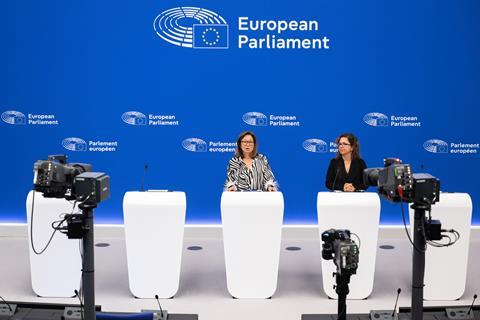
Announcing the result of the vote, the EU Parliament stated: “According to the new rules, NGT-altered plants will be split between two categories. Those with a limited number and type of changes, and which could have occurred through conventional breeding, will be categorised as NGT-1 plants and treated like conventional plants.
“All other NGT plants will fall in the NGT-2 category and will continue to be covered by the existing strict GMO rules which includes risk assessment, authorisation, labelling, traceability, and member-state opt-outs for cultivation.
“Several products made from NGT-plants are already on the market or in advanced development outside the EU, for example low-gluten wheat, pathogen-resistant potatoes, and drought-tolerant maize.”
Uniformity still lacking
The decision to recognise varieties bred using NGTs as being eligible for statutory protection finally brings the EU closer to many other countries, including Australia, which for some time already have not distinguished between varieties obtained using NGTs and those created using conventional breeding techniques when determining that eligibility – most commonly, through plant breeder’s rights.
Many countries in fact, Australia included, have only ever considered issues such as GMO in the context of commercialisation, rather than implementing formal protection.
However, the EU Parliament vote does not mean there will be complete uniformity between the EU and other UPOV Convention countries on the protection of NGT-bred varieties.
Under the approved resolution, in fact, eligibility will be based on which of two prescribed categories a variety falls under.
Put as simply as possible, the two categories divide NGT-derived varieties based on the complexity of their genetic modifications and their similarity to naturally occurring or conventionally bred varieties.
Varieties falling under category one will be treated for protection eligibility purposes the same as varieties bred using conventional techniques.
Category two covers any variety which falls outside category one, and these will need to satisfy criteria prescribed for protection under that category – essentially treating them the same as GMO varieties.

Silence on EDVs
The framework for protection in the EU of NGT-bred varieties will be based on the two-category structure, so it differs from other countries where only the traditional novelty and ‘distinctness, uniformity, and stability’ criteria apply.
As a result, the outcomes of multiple applications filed around the world for protection of the same NGT-bred variety will never inevitably or necessarily all be the same.
Time will tell to what extent the EU framework produces outcomes consistent with results in other countries like Australia, if PBR protection for the same variety is also requested there.
One critical issue not addressed by the new rules is whether an NGT-bred variety deemed eligible for protection in its own right can constitute an essentially derived variety (EDV) of the parent variety. The new regulation is silent on this issue.
In other non-EU countries, including Australia, that question can only be decided on a case-by-case basis, taking into account the specific facts of the breeding involved and its outcomes, as well as the applicable EDV law.
The meaning of EDV varies from country to country, something which will affect the outcomes of applications submitted in multiple jurisdictions regardless of how it was bred.
We can reasonably expect, however, that the number of applications in the EU for declarations of essential derivation will increase as a result of the approved resolution.
Time will tell if the registration of an NGT variety inevitably triggers such an application.
Two years to launch
At its core, the protection of proprietary varieties remains a key driver of agricultural innovation. The law must always find a way to evolve with technology.
And ten years in the making, the EU Parliament decision is most welcome, even overdue.
To treat NGT and conventional breeders differently has never been justified – the UPOV Convention has always been inherently technology neutral.
Under existing processes, the EU Regulation on NGT varieties should be fully applicable by mid-2028. It will be interesting to observe how pending applications and those filed before the formal implementation date are handled.
All breeders working with NGTs owe it to themselves to understand how they can best benefit from the growing world of protection for NGT varieties. It is however a maze best navigated with the assistance of an IP specialist.




Topics
- Austria
- Belgium
- Bulgaria
- Climate change
- Croatia
- Cyprus
- Czech Republic
- Denmark
- Environment
- Estonia
- Europe
- Finland
- Food waste
- France
- Fruit
- Germany
- Greece
- Hungary
- Ireland
- Italy
- Latvia
- Liechtenstein
- Lithuania
- Luxembourg
- Malta
- Netherlands
- Poland
- Portugal
- Research & Development
- Romania
- Slovakia
- Slovenia
- Spain
- Supply
- Sustainability
- Sweden
- Technology
- Vegetables