The European Court of Auditors calls for focus on long-term sustainability in EU’s outermost territories to preserve soil and adapt to climate change
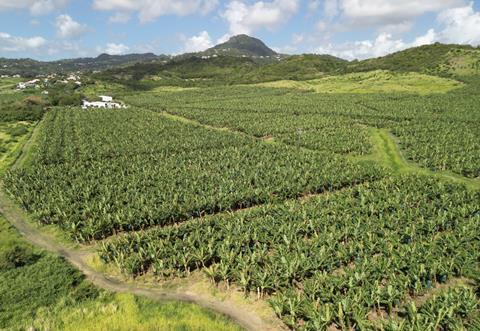
A report by the European Court of Auditors (ECA) has reiterated the importance of continued financial support to preserve agriculture in Europe’s remote and insular territories, but calls for a greater focus on long-term sustainability.
The ECA stressed the differing impact on increasing competitiveness and diversification depending on region and sector.
The EU provides up to €653mn a year through the POSEI programme to tackle the needs of its outermost regions, including French islands Guadeloupe, Martinique, French Guiana, Réunion, Saint-Martin and Mayotte, the Spanish Canary Islands and Portugal’s Azores and Madeira, all of which are highly dependent on imports.
Bananas and tomatoes are among the main traditional agricultural sectors in these regions, with most POSEI support aimed at maintaining development and strengthening competitiveness in terms of production, quality and price.
“The EU’s POSEI programme for its outermost regions delivered important support and helped some sectors to remain competitive,” said Klaus-Heiner Lehne, the ECA Member responsible for the audit. “However, it neglected long-term sustainability. EU financial support for traditional activities needs to be reassessed, diversification of crops and livestock improved, and the assessment of benefits for end users enhanced where support for imports is concerned.”
POSEI helped to maintain competitiveness in the banana sector, which is the biggest beneficiary at 42 per cent of the budget (€277mn in 2023), with EU funding concentrated on a few large producers in France’s outermost regions.
“Although the EU market offers higher retail prices for EU-grown bananas than for non-EU bananas, most retail profits go to intermediaries rather than producers, whose earnings often fail to cover costs,” the ECA said.
“Tomatoes – once an important traditional sector in the Canary Islands – have seen sharp declines in production and exports despite EU support,” it stated.
The ECA pointed to the long-term threat posed by climate change and demographic changes, as well as the strain on the soil due to a lack of crop diversification and rotation.
“The auditors note that POSEI programmes do not take sufficient account of climate-adaptation needs, despite rising risks of extreme weather events such as cyclones and extended droughts,” it said. “An ageing farmer population adds to these pressures.”


