Carrots, salad and bananas all contributed to growing organic sales at the multiple retailers, with sales up 4.2 per cent overall in the last year
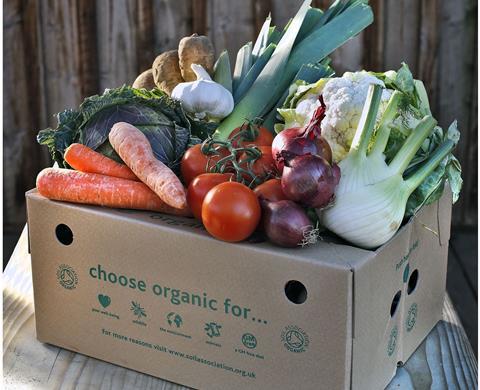
The organic market has doubled in value over the last decade to reach £3.9 billion with sales up 4.2 per cent in the last year, according to the Soil Association’s latest Organic Market Report.
The majority of growth was recorded at multiple retailer where sales rose by seven per cent, outperforming non-organic sales by four times.
Frequency of organic purchases at retail has also increased, with shoppers on average buying organic once every three weeks.
There has been strong growth in organic carrots, bananas and salad, with produce, along with dairy, remaining the largest sectors for organic sales in the UK, according to the report, which was published today (4 March).
On a global level, the UK organic market is also healthy, as the eighth largest market globally for retail sales of organic.
“The continued growth of the organic market reflects the strong consumer demand for healthier, more nature friendly food,” said commercial director at Soil Association Certification Alex Cullen.
“Concerning headlines around both pesticides and PFAS or ‘forever chemicals’ in food, and their link to health issues, have no doubt also captured consumer attention and driven shoppers to look for the organic logo.”
Imports meet growing demand as UK production stalls
But while demand is thriving, a stagnant UK organic production base means sales increases are currently being met by imports.
“Consumer demand is there for the taking – we should not allow it to continue to be met by imports,” said Soil Association farming advisor Adrian Steele.
“An English Organic Action Plan, like Scotland have just launched, would catalyse the public and private partnerships that will give farmers assurance in committing to organic conversion.”
Retailers test new organic POS activity
Overall, Ocado gained the biggest share of organic trade for the second-year running (+1.2 per cent) with Aldi, Lidl and M&S following closely behind.
“Organic is really important to Ocado and we are working hard to expand choice for our customers,” said Ocado product director, Simon Hinks. “As a retailer that over-trades in organic, we recognise the importance of securing a robust and growing pool of organic suppliers.”
M&S invested in organic during the year with increased ranging, new product launches and cross-category merchandising of organic in-store.
Waitrose, Tesco and Sainsbury’s lost share to others but continued their commitments to organic, with the latter offering price promotions on organic staples, including on fruit and veg, linked to Nectar card.
Scotland ahead of England in organic farming support
The Scottish Organic Action Plan, launched in January 2026, included a three-year, £200,000 strategy to expand organic land, increase production, and boost demand for Scottish organic products, with strategic routes to market support such as public procurement.
The latest government figures, covering 2024, show the overall percentage of UK farmland stuck at three per cent.
While there was an increase in land in-conversion in England last year, this dramatically slowed when the Sustainable Farming Incentive (SFI) closed abruptly. Last week, the government revealed details for the revised SFI including a renewed commitment to organic.