Interfel and ANPP’s Daniel Sauvaître warns of a confluence of threats, including climate pressures and future funding uncertainty
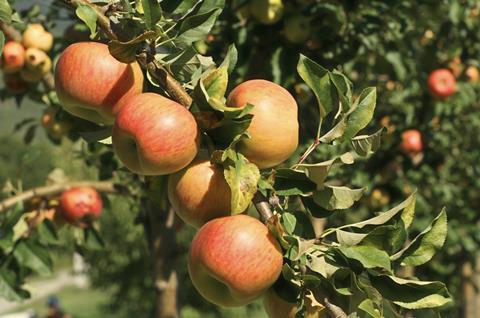
The size of this season’s European apple crop was revised downward this week by WAPA to around 9.4mn tonnes, approximately 30 per cent below average, with the shortfall affecting much of the continent.
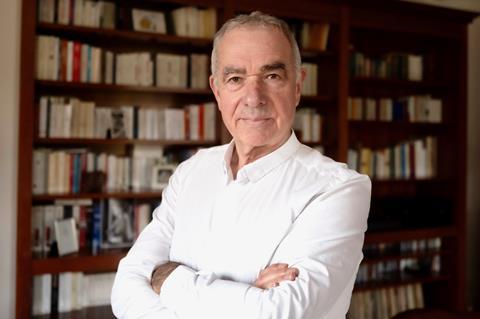
The resulting supply shortage has pushed prices higher, but Daniel Sauvaître, head of Interfel and the French apple and pear association (ANPP), warned that one grower’s gain is likely to be balanced out by the pain of many more.
“For some farmers who are down by just 10-20 per cent, it could be a profitable season,” he told Fruitnet. “But for most apple growers, it’s going to be another difficult year. When you are talking about 30 per cent less, that is a lot. And even if you have a normal crop next year, you have to win your place back on the shelf.”
Beyond the immediate challenges of a smaller harvest, growers are increasingly concerned about the longer-term consequences of climate change.
“Growers fear that what they experienced this year, with high temperatures and drought, will soon become the norm,” revealed Sauvaître. “In such conditions, you need more water, but all the regulations in France are moving in the opposite direction.”
Another emerging concern is the produce industry’s vulnerability to cyberattack. Sauvaître cited one major retailer hit by hackers targeting the maintenance systems of refrigerated storage facilities across several stores.
“Some protections hadn’t been updated, which made them vulnerable to hackers,” he explained. “With the experience of what happened two or three times recently, everything is being modernised to make it less vulnerable. We have to invest in security management and try to minimise this kind of risk.”
But perhaps the biggest concern for the future comes from proposed reforms of the Common Agricultural Policy (CAP), which could fundamentally change how European fruit and vegetable producer organisations receive financial support.
Sauvaître fears the proposed move towards national budget allocations will introduce uncertainty and potentially create significant differences between member states.
“We are afraid of the change coming,” he said. “Before, every producer organisation could get 4.6 per cent of its total sales. Now it will not be so sure.”
The proposed system would also require member states to contribute 30 per cent of the funding, with the remainder coming from the EU. For France, already under considerable public finance pressure, this could prove problematic.
“We are afraid it’s the end of a common policy for fruit and vegetables in Europe, and each country will have a different type of support for their growers,” he said.
Exports remain priority
With uncertainty at home, international markets have remained a constant for French apple producers. Sauvaître welcomed progress towards a UK-EU reset, particularly the prospect of aligning sanitary and phytosanitary (SPS) requirements.
“It’s a good thing if the UK has the same norms we have in Europe, so business can be easier,” he said.
Elsewhere, geopolitical tensions are creating new opportunities. US President Donald Trump’s trade policies have encouraged Mexico – which imports around 200,000 tonnes a year from the US – to diversify its sources. This has opened the door for European apples, and Sauvaître believes France could initially aim for 10,000-20,000 tonnes a year.
However, the reduced European harvest means there is little capacity to develop new business this season. “We don’t have the volumes this year to start business with Mexico,” he acknowledged.
Indonesia and India also remain important targets. France is working to regain access to Indonesia, where exports have halted due to SPS-related obstacles, despite a free trade agreement with the EU being in place. For India, negotiations are focused on reducing import duties to create a level playing field with Australia and New Zealand.
For Sauvaître, the importance of developing overseas markets is growing as apple consumption stagnates or declines across much of Europe. “Consumption may be decreasing for apples in France, as in most of Europe, but in some markets like Asia we are much more exotic,” he pointed out. “Just as we buy bananas in Europe, Asian consumers enjoy exotic products like apples. So for us, exports have to remain a priority.”