Project backed by Chiquita and Innocent Drinks claims major step forward in fight against disease, with new varieties potentially months from development
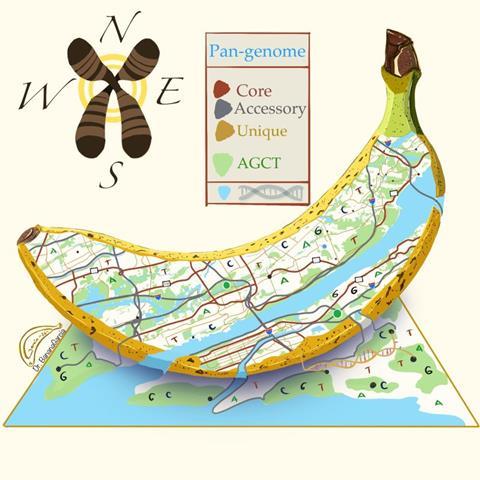
Research group KeyGene says it has successfully mapped the banana pan-genome, a scientific breakthrough which it says could lead to the imminent development of multiple new varieties – including a replacement for the world’s most widely sold type, Cavendish.
The outcome represents a major step forward in the banana industry’s fight against TR4 / Fusarium wilt – also known as Panana disease – and black sigatoka.
In effect, it allows researchers to identify around 470mn different base pairs within the DNA of any banana variety and select those with the desired traits. As a result. new, resistant varieties could enter the market within the next few years.
“The primary goal is to develop novel banana varieties,” explained KeyGene’s Anker Sørensen during a conference session held at Fruit Logistica 2026 in Berlin. “We want to [replace] the current monoculture of Cavendish with a diversity of varieties in production areas and also on the supermarket shelves.”
The pan-genome, which charts the entire genetic make-up of all banana species, was developed by KeyGene scientists using Oxford Nanopore sequencing technology, in collaboration with industry partners including fruit company Chiquita.
The project was supported by banana R&D partnership Yelloway and received match funding from Innocent Drinks – majority owned by The Coca-Cola Company – through its Farm Innovation Fund.
Peter Stedman, sustainability director at Chiquita Brands International, welcomed the news. “We have a phenomenal industry that supports hundreds of millions of livelihoods around the world, but it is wholly reliant on Cavendish,” he said. “With the pan-genome we can create the banana of the future; one that meets all the expectations of the market with Cavendish, or maybe even improves it, but also safeguards livelihoods on our farms.”
Professor Gert Kema, a leading expert in plant diseases and a Yelloway board member, suggested genes regulating resistance to the most prevalent diseases could be identified “in the coming months” as a result of the pan-genome’s creation.
“The DNA of the banana plant is like a road map,” Sørensen added. “We can now start looking for the right places in the genome where we need to be. Those pieces of DNA contain the resistant genes, which we can then transfer to the process and selection of new varieties. Now that we have this pan-genome, we can do that with a much higher precision.”
Yelloway is a joint venture partnership between fruit company Chiquita, KeyGene, and Wageningen University & Research.