France’s potato committee is communicating to the public on best practices to reduce exposure
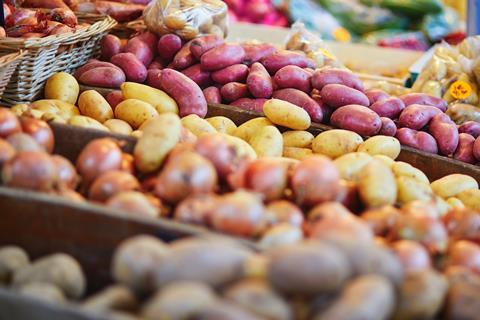
Following the recent recall by Auchan, Leclerc and Lidl in France of a batch of red potatoes containing high concentrations of glycoalkaloids – 357 tonnes in total – the French National Interprofessional Committee for Potatoes (CNIPT) has issued advice to consumers.
Glycoalkaloids are a natural component in potatoes, as in tomatoes, aubergines, peppers and chilli peppers, but certain exceptional circumstances can increase their concentration to abnormally high levels, including the summer’s heatwaves.
“The glycoalkaloid content depends in particular on the potato variety,” explained CNIPT. “However, it is not fixed at harvest time and can change under the influence of various factors, such as exposure to light, unsuitable temperatures or even shocks to the tubers.
“Consumer food safety is a priority for all professionals in the French potato industry. Throughout the potato’s life cycle, from production to marketing, professionals have well-defined tools at their disposal to control glycoalkaloid levels: variety selection, good cultivation practices, harvesting at maturity, careful handling of tubers, storage away from light and temperature control.”
CNIPT reminded consumers to store potatoes in a cool, dark place like a cellar, the refrigerator’s vegetable drawer, or a cool, dry cupboard. To further reduce exposure to glycoalkaloids, the group recommends removing any green parts and sprouts, while peeling can reduce the content by 30 per cent or more.
“Greening is an easily identifiable warning sign,” it said. “A pronounced bitter taste is also a warning sign, especially for red-skinned varieties, where greening is more difficult to detect. A heavily green potato should not be eaten. Consumers in possession of recalled potatoes should not consume them and are advised to follow the instructions available on the website rappel.conso.gouv.fr.”
Ingesting very large quantities of glycoalkaloids can reportedly cause digestive problems such as nausea, vomiting or diarrhoea, with babies and children most at risk.
“Recent incidents should not lead to questioning potato consumption as a whole,” CNIPT stated. “Industry professionals remain fully committed to managing this risk and providing consumers with high-quality potatoes.”