Rijk Zwaan’s Christian Spangenberg says category needs new colours, shapes and sizes, as well as climate resilience
Cabbage isn’t always the first product that springs to mind when people talk about foods that get them excited, but for Christian Spangenberg, crop co-ordinator at Rijk Zwaan, it’s definitely a category where innovation has the potential to stir a more positive reaction from consumers.
“This world-class crop deserves a place in the spotlight,” he suggests. And his work is certainly focused squarely on achieving that goal.
For him, new colours, shapes and sizes, as well as crops that are more resistant to climate change, are essential for the future success of the entire brassica category.
That’s why the company recently launched a campaign called Embrace Brassicas, with the goal of surprising consumers as well as offering versatility and nutritional benefits.
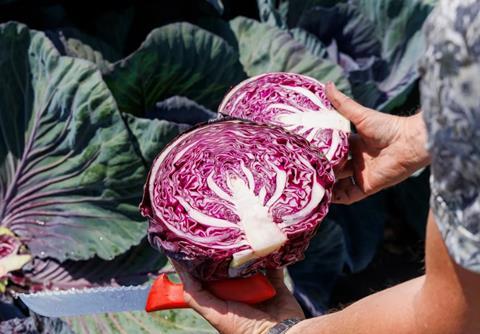
“Together with our chain managers and partners, we will inspire consumers with innovations such as rosé cabbage,” Spangenberg says.
“Cabbages are eaten worldwide in all seasons. In warmer regions, it’s possible to grow them year round. In Europe and North America, they are stored regionally to ensure year-round availability,” he continues.
“We want to offer cabbage growers across the globe the varieties that meet their specific market and climate requirements.”
New varieties
As a result, Spangenberg and his team are focused not just on developing robust, resilient varieties, but on products with the power to inspire.
“Cabbage is so much more than a trusty vegetable, but that’s not always acknowledged in the value chain,” he says. “That’s why I’m happy the Embrace Brassicas campaign has some surprises for customers and consumers – with new colours, unusual shapes and interesting product-market combinations.”
Those novelties include the aforementioned rosé cabbage, which doesn’t ‘bleed’ when chopped or served, as well as flatter white cabbage varieties like Manouk RZ, which has thinner leaves suitable for wraps, rolls and fermentation.
Another example is a pointed cabbage, recently launched in Chile. “The retailers there are enthusiastic about this new shape,” Spangenberg reports.
“And in urban areas in China, we find that supermarkets are choosing smaller-sized cabbages, both because they require less shelf space and because they respond to the needs of smaller households.”
Climate concerns
Looking ahead to the future, Spangenberg says he believes the climate will be the biggest challenge for growers.
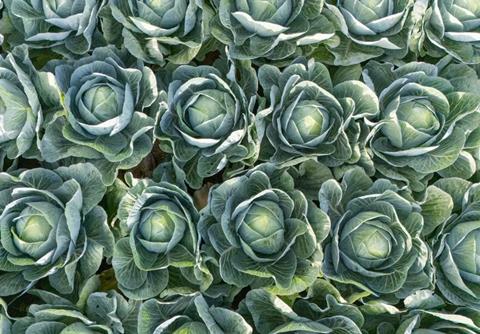
“Fluctuating temperatures, longer periods of drought and extreme rainfall – they all have a negative effect on the growth of cabbages, which sometimes spend up to five months out in the field. Such changeable weather will often lead to lower yield and quality.”
Therefore, robustness is an increasingly important consideration when searching for new varieties. “Our breeders select varieties that develop a strong root system and can cope better with fluctuating weather conditions,” he says.