New Fepex data reveals Spain’s fresh produce imports reached 1.75mn tonnes between January and April 2026, up 6.2 per cent year-on-year
Spanish imports of fresh fruit and vegetables totalled 1.75mn tonnes between January and April 2026, compared to 1.65mn tonnes during the same period last year.
This represented an increase of 6.2 per cent, according to data from the Department of Customs and Special Taxes, processed by Fepex.
Fruit was the primary driver of this growth, with imports reaching 818,086 tonnes, up 9.4 per cent on the first four months of 2025.
Vegetable imports, meanwhile, totalled 936,495 tonnes, an increase of 3.5 per cent.
Among vegetables, potatoes remained the most imported product at 565,229 tonnes, despite a slight 1.4 per cent decline year-on-year.
Notable increases were also seen in onions, with 104,778 tonnes (up 13.4 per cent); peppers, with 53,094 tonnes (up 18.5 per cent), and tomatoes, with 51,999 tonnes (up 6.1 per cent).
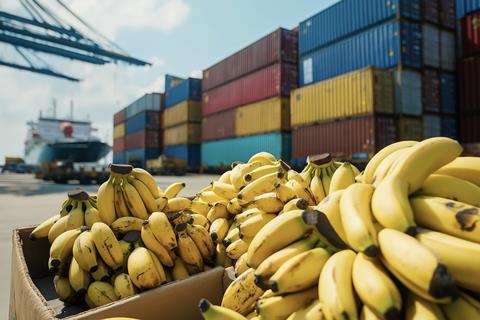
In the fruit segment, there was a surge in banana imports, up 25.2 per cent to 159,124 tonnes.
Significant growth was also recorded for kiwifruit (61,740 tonnes, up 11.6 per cent), apples (72,290 tonnes, up 6.2 per cent), and pineapples (59,855 tonnes, up 6.8 per cent).
In terms of value, fruit imports are also driving growth across the entire sector, Fepex reported.
The country’s fresh produce imports reached €2.095bn, up from the €2.007bn recorded between January and April 2025, marking a 4.4 per cent increase.
Fruit imports totalled €1.46bn, up 9.1 per cent on the first four months of the previous year.
Leading the list of high-value fruit imports were blueberries (€218mn, up 11 per cent), avocados (€178mn), and raspberries (€168mn, up 13 per cent).
By contrast, the value of vegetable imports fell 5 per cent to €634mn.
Potatoes remained the top import by value, despite a significant year-on-year 33 per cent drop to €250mn.
The highest vegetable growth rates were seen in pepper imports (up 30 per cent to €82mn) and tomato imports (up 21 per cent to €99mn).
”For Fepex, import trends once again highlight the growing presence of foreign products in the Spanish and EU markets, a situation unfolding against a backdrop of increasingly high regulatory requirements and production costs for European producers,” the association noted.
”Consequently, Fepex considers it a priority to move towards greater reciprocity regarding the production and marketing conditions required for imports from third countries.”