Eighty years since the Soil Association was founded in the shadow of the Second World War, CEO Helen Browning reveals her pride that the organisation’s ideas are finally entering the mainstream
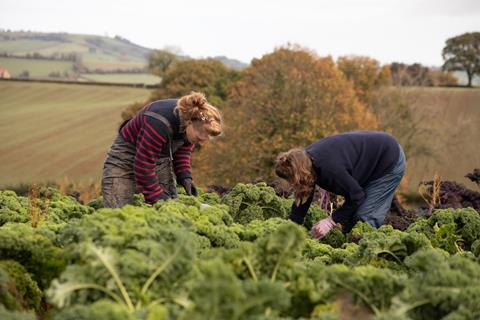
Founded in 1946, the UK’s Soil Association emerged after the Second World War, just as British agriculture was entering an era of intensification, driven by food shortages and the push for self-sufficiency. For decades, according to CEO Helen Browning, the association’s focus on soil health and nature-based farming sat firmly outside the agricultural mainstream.
“The Soil Association was born out of a whole lot of thinking on how we can build up our soils to produce healthy food for healthy people,” says Browning. “At the time, though, all that thinking was slightly swept away by the post-war ‘yield at any cost’ mentality.”
What’s exciting now, she says, as the Soil Association marks its 80th anniversary, is how sustainability is “in vogue”. “Everybody’s thinking about how we can farm in a more sustainable way,” she says. “It feels as if this is the moment a lot of these ideas can become most useful to the world.”
That change in mood comes at a turbulent moment for UK farming and fresh produce. Growers are contending with volatile weather, rising input costs, shifting government policy and continued pressure from retailers and consumers alike.
“Farmers are operating in a very volatile context,” says Browning. “There’s always been the weather to contend with, but there’s also evolving market requirements, changing government policy and huge uncertainty around costs.”
The sudden closure of England’s Sustainable Farming Incentive (SFI) scheme last year highlighted some of those tensions. Browning believes the government underestimated how quickly farmers would eventually embrace the scheme.
“They were trying quite hard to get farmers into the SFI and uptake was slow,” she says. “Then farmers all rushed in and the budget was quickly exceeded. It wasn’t that they stopped it, they just ran out of money. But it was very abrupt and people hadn’t seen it coming.”
Despite ongoing economic pressures, Browning says the UK organic market remains resilient. “The organic market is growing really quite fast in the UK, faster than the conventional market,” she explains. “And in a way, it’s probably slightly more buffered from some of the shocks from the Gulf crisis because we’re not using nitrogen fertiliser and not quite so reliant on fuel either.”
The importance of trust
Encouragingly for the sector, Browning says growth is increasingly coming from younger consumers and lower-income groups. “It doesn’t feel like organic is bracketed as only for one end of the market,” she says. “That’s always worried me. I don’t want it to be about posh food for posh people. We want great food to be available to everybody.”
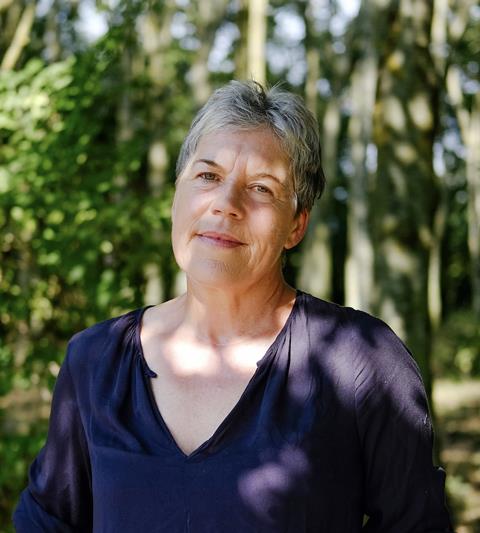
Trust, she argues, has become one of organic’s greatest strengths in an era of confusion around sustainability claims. “People are really confident about the standards and the fact it’s properly inspected,” she says. “There’s a rigour around it that people really appreciate.”
Still, she is clear that boosting fruit and vegetable consumption matters more than arguing over labels. “From the Soil Association’s point of view, we’re incredibly keen to see people eating more fresh produce, almost whether it’s organic or not,” she says. “Great fruit and veg, great fresh food, is a joy.”
That enjoyment factor, Browning argues, is often overlooked in conversations around healthier diets. “We’ve often not concentrated enough on flavour, accessibility and convenience,” she says. “If you want people to adopt healthier diets, the eating quality is everything.”
Browning believes the UK has significant untapped potential in domestic fruit production, particularly given the country still imports around 85 per cent of its fruit.
“There’s a very big import gap to fill,” she says. “I don’t think we should become entirely parochial, but there’s absolutely an opportunity for us to be doing a lot more in the UK.”
Of course, climate change is forcing growers to adapt to new conditions, but Browning believes technology and data can play a crucial role. “One area we’re very focused on is how we get better data from our farming and growing systems and actually learn from that data,” she explains. “This is a time of great learning, so we’re looking at how we can accelerate that learning and back growers to do the research they need themselves.”
Through Soil Association Exchange, the organisation is working with around 2,000 farms to collect environmental and welfare data, helping growers benchmark performance and improve practices.“The opportunity to be picking up data in real time and learning what methods work best is really exciting,” she says.
For Browning, however, sustainability cannot simply mean producing food more efficiently. It must also involve rethinking diets and reconnecting consumers with fresh produce. “We do need to moderate our meat and dairy consumption and increase our fresh produce consumption,” she says. “But it has to feel like something people want to do, rather than a chore.”
That is why much of the Soil Association’s work focuses on schools, hospitals and public sector catering. “I’d love to see us get even more involved in the whole public procurement space, and to be making sure that every child gets at least one healthy and sustainable meal a day in their schools,” says Browning. “That’s one of our goals. And we need to make sure that that equality of access to great food is built upon.”
Getting children involved in the production side has also proved to be highly effective. “Kids who have grown something will eat it,” says Browning. “If they’ve grown the beans, they’ll eat the beans, it’s as simple as that. So schools are the perfect environment to allow children to experiment and widen their palate.”
To mark its 80th anniversary, the Soil Association is spotlighting “80 Voices”, a collection of stories from farmers, growers, foresters and community leaders showcasing practical examples of nature-friendly farming and sustainable food production, and highlighting individuals who are transforming the food system and restoring biodiversity.
“Throughout the year, we will of course be highlighting some of the good things that the Soil Association has achieved in the past, but the focus will be on the future, looking ahead to what we need to do,” says Browning. “That is much more important than patting ourselves on the back. We did all enjoy some birthday cake though, which was nice!”