Spain Food Nation Summit 2026 hears how health trend presents growing opportunity for Spanish suppliers
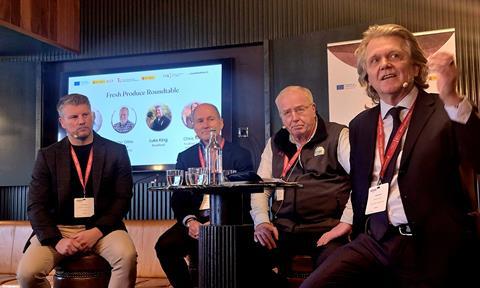
A growing awareness of the dangers of ultra processed foods is fuelling demand for healthy foods and presents a growing opportunity for Spanish-grown organic fruits and vegetables in the UK market. However, marketing messages should centre on the health and taste rather than the environmental benefits of organics.
This was the take-home from the Spain Food Nation Summit, organised by Foods and Wine from Spain, which took place in Mare Street Market in London on Tuesday. Attendees heard how Spain could harness its reputation for great weather and abundant lands to highlight the natural nature of its food.
The UK market lags way behind continental neighbours like Austria, Denmark and Germany when it comes to sales of organic food, largely because of a lack of government support. At retail, the picture is mixed, with Waitrose, Sainsbury’s and Tesco overperforming while Asda, Morrisons, Aldi and Lidl have a much lower penetration of organic produce as a share of total produce sold. Home delivery companies, meanwhile, have seen significant growth and currently account for a 15 per cent share of organic produce sales.
Fruits and vegetables make up 23 per cent the UK organics market, and sales are increasing in volume and value, albeit slowly.
Millie Diamond, food and drink trend strategist at WGSN, highlighted the “ragged and raw” trend reflecting a shift toward authentic, unprocessed and natural ingredients as consumers seek healthier, transparent food options. “This creates a huge opportunity to produce great tasting, nutrient dense produce – people want the very best products in their most natural form,” she said.
Luke King, supply chain and technical director at Riverford, noted that there had been a marked shift in the profile of a typical organics consumer in the UK. “In the past, our clientele was typically made up of organic enthusiasts, concerned about the environment and ethical trade, but this is moving into the background. Now it’s all about personal health,” he said.
John Giles of Promar International said that while the EU’s Farm to Fork policy demonstrated a very strong commitment to organic agriculture, this was lacking in the UK. “With UK organic production going down, there is an opportunity for Spain to fill that demand,” he said, adding that a phytosanitary agreement between the UK and the EU would facilitate the organics trade.
It was agreed that price was once of the main barriers to organics growth. Alastair Smith of Planet Organic pointed to the Soil Association’s staircase model showing that organics Shoppers typically begin with high-volume, “essential” commodities where the health or environmental benefits are easily understood, such as carrots and bananas, before “trading up” to other categories.
Red Communications’ John Valentine called for more clarity about the benefits of buying organic, pointing out that if these were communicated to consumers in the right way, people would be happy to pay an organics premium.
Concluding the event, Maria Naranjo, director of the agrifood department at Spanish trade promotion body Icex, highlighted the quality and breadth of Spain’s food and drink offer, saying: “We believe that Spain can compete at the highest level. We have first class products. We need to believe this and build a reputation, build image of excellence”.
After the summit, Foods and Wines from Spain hosted a Taste Spain event featuring chef demonstrations, tastings and masterclasses from leading Spanish food and wine producers.