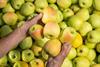
The heat may be a continuous concern for Portuguese producers, but so is the challenge of getting consumers to look beyond the minor blemishes to get to the taste of Algarve’s top-quality oranges

For producers of Citrinos do Algarve PGI oranges on the hilly southern coast of Portugal, there are two challenges that emerge above all others: first, the growing impact of climate change, not least the overly fluid issue of water availability; and second, the continuous struggle to get consumers to favour taste, flavour and juiciness – something the region’s citrus is known for – over skin-deep, aesthetics-first “perfection”.
“They buy with their eyes,” is a common refrain when it comes to British consumers, supposedly turning their noses up at any citrus fruit that isn’t 100 per cent high-viz.
The truth is, many UK consumers will have rarely seen a fruit with a blemish, such is the severity of most supermarket standards. And, in reality, all shoppers tend to favour a blemish-free fruit when it’s placed next to one with a mark – at least if they lack the knowledge to understand what’s actually good for them.
Indeed, what these Algarve oranges may not offer in terms of blemish-free “perfection”, they more than make up for when it comes to their sweetness and juiciness. Since the oranges are ripened on the tree for longer than their competitors, their relatively thin skin that makes them so easy to peel is left vulnerable to the elements for longer, risking sunburn and scratches from wind-blown branches, but it adds to the fruit’s taste.

The question is, how much does a consumer value taste? Although 35 per cent of Citrinos do Algarve are exported across Europe – to markets including Germany, France, Spain, Poland, Switzerland and Luxembourg – none currently makes the trip to the UK, partly a result of the multitude of standards required. But budging on the internal quality of the fruit remains non-negotiable for producers.
“When harvest time approaches, we pick a few and use spectrometry to do an analysis of the sugar, acidity and juice level,” reveals José Oliveira, chairman of AlgarOrange, which is leading the ‘Get the Taste. Feel the Sun’ campaign for the region’s citrus. “If they don’t meet our minimum level, we wait.”

The campaign’s slogan aims to transmit the sensory experience of tasting Algarve citrus to consumers. “The sun, the sea – everything contributes to the climate where our fruits are produced,” explains Sílvia Neves, vice president of AlgarOrange. “This climate, with the Atlantic breeze influence and different soils, gives our oranges the perfect balance between acidity and sweetness.”
AlgarOrange was created by the region’s producers eight years ago, chiefly to give value to its citrus and to work together to promote it. “This is a project of scale and ambition that will place Citrinos do Algarve PGI on the international map,” Oliveira says of the new campaign. “We are opening up in strategic markets and strengthening the competitiveness of the region’s companies.”
In the 2023/24 season, sales volumes of citrus certified under the PGI exceeded 64,000 tonnes, the highest figure in eight years.
Quality comes first
France and Germany are the main foreign markets for the campaign, but Belgium is also considered to have strong growth potential. Taste, of course, will be key.
“We cannot compete on price so our focus is on quality,” says Oliveira. “Egypt, Spain, Morocco, they have huge quantities – we produce less than 400,000 tonnes of oranges a year here in Portugal.”
“What we want is to have the best citrus, and to guarantee our quality,” confirms António Alves of producer group Frusoal. “We already have a lot of certifications, including GlobalGAP, Grasp, now we have Spring. We already have some parts certified with regenerative agriculture, and of course we have the protected geographical indication, and our brands, Gomo and BioGomo.”
Production in the region is grounded in sustainable farming practices that promote efficient water use, soil protection and the enhancement of the local ecosystem, according to Oliveira, ensuring respect for the environment and product quality. In recent years, productivity has apparently grown steadily, thanks to efficient resource management and continued investment in innovation and technology.
Inside one advanced packing facility, a MAF Roda grading machine sorts through 30-35 tonnes of oranges per hour, its 32 cameras snapping from all angles, grading according to quality, size, colour and weight. For now it is sorting through a river of oranges, but it can handle all kinds of citrus.

“This is the latest technology,” notes Alves. “It’s very impressive.” This process determines where the fruit ultimately goes: which line; which export market; which supermarket, even. However, whatever the precision, no matter the focus on quality, prices for oranges remain low.
“There is a lot of competition from cheaper Egyptian oranges,” confirms Alves. “Brazil’s season is right at the end of ours so that’s no problem. A bigger issue is probably the current hot temperatures and the increased competition we get from stonefruit, watermelons and other summer fruits as a result.”
Combined with high summer temperatures, the region has suffered a years-long drought, its first proper rain only arriving this past winter, helping to replenish the country’s dusty reservoirs. However, concerns are growing for the longer term. The average age of Algarve’s citrus producers is around 60, and encouraging the next generation to take on the burden of caring for the area’s unique trees, and the uncertainty that comes with it, is no easy task.
“After the rain, the reservoirs are full, enough for around three years, but we worry about the future,” admits Oliveira. “Summer temperatures can exceed 40C, so the trees need a lot of water. We have to regularly check the humidity of the soil, and almost every producer has drip irrigation. We also use software to know exactly when to add fertiliser. But it will be a challenge.”
Reversing the impacts of climate change may be out of the hands of Algarve’s dedicated orange growers, but marketers are certainly working on the challenge of encouraging consumers to buy with more than just their eyes. “We still have a lot of work to do to show people that great appearance does not equal great quality,” says Oliveira. “Especially in the UK.”