Federico Puyó, product manager cucumber and pepper at Hazera Seeds, discusses the important trends and traits driving the business
What are the key areas of focus for your pepper business?
Federico Puyó: Climate adaptation is accelerating. There is increased demand for heat-tolerant varieties – especially in greenhouse production – as well as varieties performing under water scarcity or salinity stress. We are also seeing a shift in production geographies, with expansion in new segments due to climate, pests or cost pressures.
Sustainability and reduced inputs are also key. There is an emphasis on breeding for lower pesticide use and varieties suited for biological control, through balanced plant habit and leaf cover, and disease resistances against virus, fungus and soil-borne pathogens.
Which are your standout varieties?
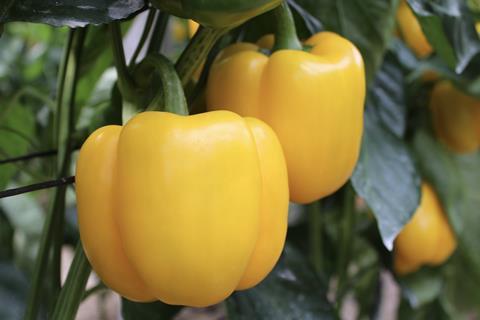
FP: Our portfolio is led by two flagship yellow blocky greenhouse varieties, Insignia and Fenix, both specifically developed for overwinter production systems and high export quality.
Insignia, widely grown in Almería for the European market, and Fenix, tailored for production in México supplying the US and Canada, are both market leaders in their respective segments. They are consistently the first choice for growers thanks to their high yield potential, strong plant stability, and reliable performance under challenging winter conditions. Both varieties offer a robust disease resistance package adapted to the key pathogens in each region and have proven their consistency and adaptability across different growing areas.
In terms of traits, what are growers and consumers looking for respectively?
FP: Today’s growers are looking for varieties that reduce risk while maintaining high and stable yields under increasingly unpredictable conditions. This is driven by traits like yield and uniformity, disease resistance, climate resilience, and shelf-life and firmness which is important for supply chains. Some emerging priorities include compatibility with biological growing systems and reduced labour.
Consumers are prioritising taste and sweetness, alongside convenience-driven attributes such as snack-sized formats and ready-to-eat products, while visual appeal also plays a key role.
Balancing grower needs with consumer expectations remains one of the biggest challenges in breeding. That means trade-offs including shelf-life versus flavour, yield versus taste, and disease resistance versus fruit quality.
How is the pepper market performing?
FP: The global pepper market remains generally positive, with steady growth driven by increasing demography and more demand for healthy, fresh vegetables and convenient consumption formats such as snack peppers. Retailers are also pushing for consistent quality and year-round supply. At the same time, the sector faces challenges from rising production costs and price volatility.
Looking ahead, the focus remains on delivering versatile pepper varieties that support more sustainable production while meeting the evolving needs of both growers and consumers. Close collaboration across the industry is key to ensuring continued success in the face of climate challenges and changing market demands.
In this context, Hazera remains strongly committed to its breeding efforts, continuously investing in the development of varieties that combine performance, resilience and quality for the future.


