French exporters will showcase the diversity of their produce at Fruit Attraction in Madrid, as Interfel stresses the need to adapt to climate change and rebuild consumption
France’s Interfel is hosting 50 French exporters at next month’s Fruit Attraction exhibition in Madrid, where the focus will be on demonstrating the diversity of French fresh produce, opening up new markets and discussing the key challenges of adapting to climate change and rebuilding fresh produce consumption, particularly among younger consumers.
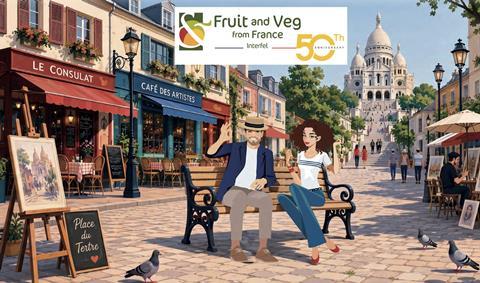
“Fruit Attraction is a key event for us, and this year it has a particularly special significance as we celebrate the association’s 50th anniversary,” said Daniel Soares, international director at Interfel. “For this edition, we wanted to go beyond a traditional institutional stand and offer visitors a genuine taste of France. We have taken inspiration from Paris and the French art de vivre, bringing these to life through our fresh fruit and vegetables.”
Interfel’s 1,024m2 stand will feature a restaurant, a kitchen and a demonstration area, in addition to activities including pétanque, caricatures and a photo booth.
Europe is the main destination for French fruit and vegetable exports – 2.23mn tonnes in 2025/26 worth €3.38bn, representing 80 per cent of the total – but market diversification remains a top priority.
Around 300 tonnes of French apples were sent to Mexico after the country opened up in 2025, but the strongest growth has been seen in Asia, with exports to the region rising by 18 per cent to 32,700 tonnes.
Volumes to India and China doubled to around 7,600 tonnes and 3,000 tonnes respectively, while the Middle East, led by the UAE and Saudi Arabia, remains another priority.
“The challenge is not simply to open up new markets, but to turn sanitary and phytosanitary access into stable trading relationships,” stated Soares. “Geopolitical developments are also forcing us to strengthen logistical resilience: disruption in the Red Sea has shown how quickly an international crisis can drive up costs and transit times.”
And the summer’s extreme heat and drought highlight the urgent need to accelerate the sector’s adaptation to climate change. “Summer 2026 has been exceptionally challenging in France,” revealed Soares. “Climate adaptation has become a structural issue for us. However, the agroecological transition can only succeed if it is economically viable. We cannot expect producers to shoulder the full cost of this transformation: climate adaptation, competitiveness and food sovereignty must move forward together.”
Solutions include modernising irrigation systems, improving water storage, adapting greenhouse production, protecting crops from solar radiation, and researching new varieties and production techniques, according to Interfel.
Meanwhile, promotional campaigns targeting younger consumers will look beyond health to boost interest. “A purely nutritional message is no longer enough,” argued Soares. “We need to talk about enjoyment, taste, creativity and convenience to create desire and build healthy habits for the long term.”
Under its slogan ‘Produce, adapt and re-engage’, Interfel said it understood the importance of safeguarding production capacity, supporting generational renewal and maintaining the sector’s economic viability.
“After 50 years of history, our responsibility is to prepare for the next 50,” concluded Soares. “We want France to continue to have a strong, competitive and sustainable fresh fruit and vegetable sector, capable of creating value for everyone across the supply chain and meeting consumers’ expectations.”