



Robinson Fresh owner secures bigger profit thanks to continued restructuring, but warns of uncertainty ahead
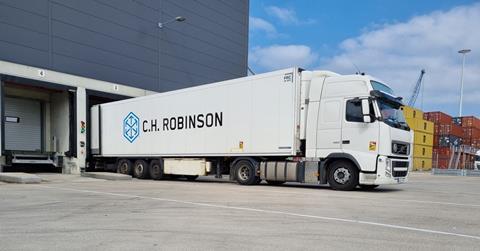
Logistics group CH Robinson, which owns the fresh produce sourcing and distribution specialist Robinson Fresh, has reported higher profit for 2025 despite lower revenue, as continued investment in AI and automation help it to reduce its overall headcount and running costs.
But it also warned of a more challenging trading environment ahead, as uncertainty over tariffs and military conflict continue to affect supply chains.
In its annual report, the company said its operating income was 18.8 per cent higher for the year at US795mn, while total revenue was down 8.4 per cent to US$16.23bn.
Costs and expenses, however, were also down significantly – by US$1.44bn to US$13.56bn.
According to the group, it lowered its staffing cost by 5.9 percent to US$1.4bn as part of an effort to minimise costs and boost productivity – work which included an 11.5 per cent reduction in employee numbers.
In the second quarter of 2025, it launched a restructuring programme with the aim to make a smaller workforce more productive.
This involves the introduction of more efficient processes and – therefore eventual cost savings – through the adoption of advanced technologies, including artificial intelligence, to reduce the number of manual processes.
Robinson Fresh itself posted a 10.1 per cent annual increased in adjusted gross profit to US$161.1mn, apparently driven by an increase in integrated supply chain solutions for retail and foodservice customers.
Uncertain future
Sales through the division were also higher, it said, thanks to “increased case volume” with retail and foodservice customers.
Looking ahead, the group said it expected a great deal of uncertainty due to “geopolitical and macroeconomic factors, including evolving trade policies, the Red Sea conflict, and carriers’ ability to effectively manage excess capacity”.
Despite the uncertainty, it predicted ocean freight pricing would remain “under pressure” until global demand showed “meaningful” improvement.
“Similar dynamics continue to affect the airfreight market,” it noted. “Although demand has shown resilience in certain technology-focused sectors, overall airfreight pricing remains sensitive to tariff developments and broader economic conditions, including cost-efficient ocean freight rates.”