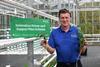
France must embrace the interconnectedness of the world if it wants to secure the future of fresh produce in the country, says Interfel president Daniel Sauvaitre
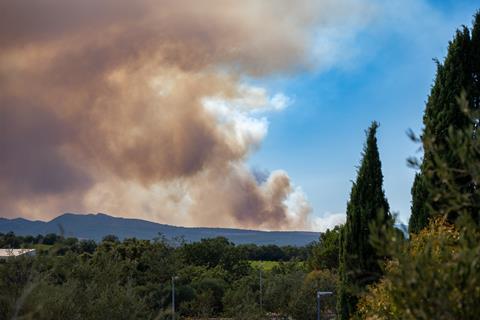
Climate change, like major geopolitical crises such as this year’s Gulf standoff, has the capacity to make the world feel smaller, as its impacts are felt, at different points and to varying degrees, throughout the entire globe. According to Daniel Sauvaitre, president of French interprofessional organisation Interfel, the current situation is exposing countries’ often overlooked interdependence.
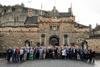
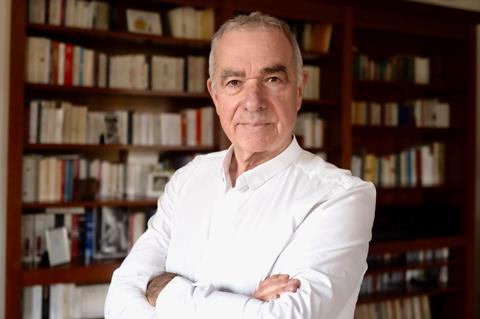
Speaking from Paris after Interfel hosted its first general assembly focused on the state of the global fruit and vegetables industry, Sauvaitre said the aim was to look beyond France’s borders and grapple with the wider forces reshaping the fresh produce sector.
“It was the first time our organisation has done that kind of event,” he said, “looking not only at the French situation, but fresh fruit and vegetables around the globe – discussing climate, trade, trade agreements, everything.”
Climate change was a timely topic in the French capital, where a second heatwave had already arrived by June’s end. “Everybody is very worried about the situation, and much more in the western part of France,” Sauvaitre revealed. “The southeast, which is usually the hottest place in France, was even a bit cooler than the western part.”
Perhaps nowhere in France has the impact been felt more acutely than Brittany, where vegetable production has historically relied far less on irrigation than other growing regions.
“This year they are worried,” said Sauvaitre, “because it is impacting their production a lot. This comes after a bad winter, which was cool with a lot of rain. They had big crops and experienced difficulties on the market. Now the trouble is heat and drought.”
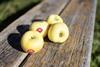
For France’s fruit growers, meanwhile, the heat is quickly surpassing spring frosts as the biggest threat to production. “This year, with temperatures above 40C, some apples that are in direct sunlight are getting sunburnt,” Sauvaitre reported. “We used to be mainly afraid of the spring, because if we have four or five nights below zero, apple cultivation becomes difficult. Now we are thinking that we could have the reverse problem, with several days of temperatures above 40C.”
Whether this proves to be an exceptional year remains to be seen, but the reaction of growers will be crucial. “The trouble now is some people are thinking that, if you have five to ten days like this every year, growing apples is a risk,” says Sauvaitre. “We have had severe heat before, but it is the start of July, and we are in our second heatwave already.”
Impasse on water
Sauvaitre believes France is failing to make use of one of its greatest natural advantages: an abundance of water. “What we’re saying to politicians is that we’re a very interesting country when it comes to water,” he said. “Because we have a lot of rain, and climate change may give us even more, at least during the winter.”
Political resistance continues to impede construction of reservoirs capable of storing winter rainfall for use during increasingly dry summers. Environmental concerns over ownership and usage have dominated the debate, but Sauvaitre warned that France risks falling behind competing producers.
“We do not store enough, especially compared with countries like Spain, Portugal and Morocco,” he said. “We will lack water for growing fruit and vegetables because of our resistance to water storage.”
The discussion around water cannot, in Sauvaitre’s view, be separated from trade. France should be maximising production through better water management while strengthening international partnerships, he believes.
According to Sauvaitre, the recent crisis in the Gulf crystallised the importance of such a strategy. Production issues in Turkey had enabled French apple exporters to recover some market share in the Gulf prior to the conflict between Israel and Iran, and that proved to be a useful form of leverage.
“When the war started, there were around 300 containers of French apples on the sea heading to the Gulf, and unable to arrive at their destination,” explained Sauvaitre. “We of course need energy from the Gulf, but that region is also reliant on supplies of fruit and vegetables.”
This is the reality of food sovereignty, he said. “In France, politicians are always speaking about sovereignty, but you cannot really have it without also having something to export to countries that supply what you need.”
Interfel recently signed a memorandum of understanding with Abu Dhabi, where a new wholesale market is being developed under the Rungis brand. “The idea,” said Sauvaitre, “is to build together a specific link for fruit and vegetables from France using this hub in Abu Dhabi.”
Investing in education
Ultimately, Interfel’s priority remains boosting fruit and vegetable consumption domestically. “The main thing for us in France is to make sure people are happy when they are in front of the fresh produce shelves,” said Sauvaitre. “For that you need well trained personnel in the fruit and vegetables aisle. It’s a very difficult job because you have to manage a hundred different products.”
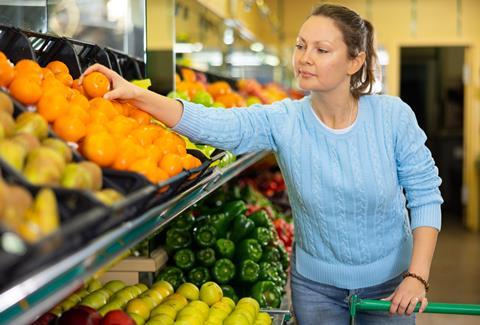
Interfel is working with retailers to improve in-store training, helping to reduce waste while improving product presentation. “For most consumers, confidence in a product comes from the appearance,” said Sauvaitre. “What we need to do is educate, because people are so far removed from the orchards and the land that they don’t have the knowledge.”
New regulations on new genomic techniques (NGTs) in the EU also represent a move in the right direction, he believes. “It’s a very positive step,” he said. “It will help more at present on vegetables than fruits, but it opens up new ways of improving varieties. We have been waiting for this. In France, we take too long to make good decisions.”