Top-down health messaging is less of a priority for European marketers of exotics, with the focus being on innovation and helping consumers discover the tastes and uses of lesser known fruits
When it comes to marketing exotic fruit in Europe, success may depend less on telling shoppers what they should eat and more on helping them to discover new tastes and finding enjoyment in food. That’s the view of Thierry Montange, senior marketing director for Europe and Africa at Fresh Del Monte.
“Exotics are growing fast, but it’s a challenging category,” he says. “We need to bring value and innovation to shoppers who might not have the knowledge that we people in the industry have – how to choose the best fruits, how to use these fruits at home, how to make educated decisions when they shop.”
That educational gap is precisely where marketers must focus their efforts, Montange believes, with traditional health messaging alone seen as insufficient to drive engagement.
“What you should not do is be top-down,” he says. “People receive too many instructions already – ‘five a day’ and so on. At the end of the day, they want to enjoy their food.”
Instead, brands need to find new ways to integrate exotic fruits into everyday life, he says, with younger consumers an important target. “It’s about finding new ways to eat exotics,” he says. “Kids love fruit, but they need convenience and they need fun ways to interact with it.”
One innovation is the company’s seasonal Valentine Del Monte mango, an initiative designed to connect consumers through social media. “It’s a special mango that we bring by air just in February,” he explains. “You can scan the QR code, go to our social media, and maybe you will match with someone in your city who also loves mangoes.”
This type of campaign, he says, goes beyond traditional marketing narratives. “It’s not only about storytelling,” says Montange, “it’s about story-doing.” In his view, the key to unlocking further category growth lies in demonstrating how exotic fruits can be used in everyday cooking.
“What we try to focus on is educating people on usage,” he explains. “People say fruit is a saturated category, but there is still huge growth potential. If tomorrow all of Europe ate the same quantity of avocados as they do in California, the category would grow massively.”
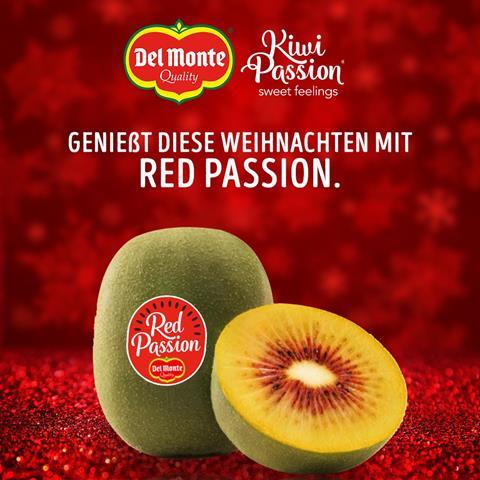
Innovation within established categories is another way to keep consumers engaged. One emerging example is the red-fleshed kiwifruit. “This variety has existed for centuries in China,” Montange notes. “But the industry here has been focused mainly on green and gold. A group of growers in Italy started redeveloping the red kiwifruit to give it a more tropical taste and a beautiful red flesh. The result is the Red Passion, which is positioned as a premium kiwifruit.”
Innovation also extends beyond the fruit itself, particularly in sustainability. “Our commitment is to reduce waste significantly at every level – from the field to the consumer,” Montange explains. “Efficient production of pineapple concentrates and IQF allow us to reduce fruit waste very significantly. But we also have many other innovative initiatives like converting pineapple leaf waste into textiles or new ways to transform plant residue into biofertiliser, cattle feed or heating pellets. And there are companies making very interesting developments in the production of textiles from banana plant fibres.”
Such developments, he argues, show how far the fresh produce sector can go when innovation runs across the entire value chain. “If growers, importers and consumers work hand in hand, I don’t think there is any limit to what we can achieve in sustainability,” he says.
Ultimately, however, any innovation will depend on one principle: consistent quality. “That’s the root of our company,” Montange says. “If you look at our logo, ‘Quality’ is always written underneath it. Everyone in the company is committed to that. Consumers may only see the finished product on the shelf, so the work behind it may go a bit unnoticed, but quality clearly has value. Our job is to make sure our brand is trusted to deliver that end result.”