


West Sussex herb producer has maintained water supplies and even sold surplus to local producers thanks to extensive reservoir network and water recycling
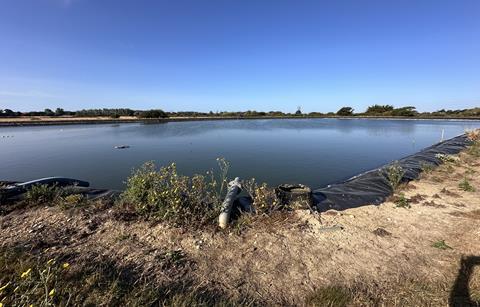
Langmead Herbs has hailed forward-planning and a multi-pronged approach for its water resilience amid widespread drought this summer.
The Chichester-based herb producer says it has managed to keep its crops alive and supply its customers in full – and has even had enough capacity to sell surplus water to several West Sussex producers in a more precarious position.
The herb specialist – which grows over 200 hectares of herbs and salads in open fields and polytunnels across its sites in West Sussex – is confident of having enough water to support its production until the end of this season. By contrast, many other UK vegetable producers are either running low or have already run out of water.
Langmead’s head of farming Adam Sutcliffe puts the company’s water security down to a combination of on-farm reservoirs, water recycling, a reed bed system that purifies these water washings, careful water management, and effective irrigation planning.
Despite these measures, he concedes that this summer’s extreme temperatures have caused some crops to slow down or go dormant. But the producer has been able to minimise bolting and quality defects by keeping crops well irrigated, thereby reducing stress.

“We have a very extensive water network that has been in place and built upon over a number of decades,” Sutcliffe told FPJ. “Most of our 16 reservoirs are connected by an underground network that allows us to move water around our farming estate, giving us control over how much water we have and where.
“We have licences that allow us to abstract water during both the summer and winter, ensuring we always have full reservoirs going into each season. And although they are slowing down now, we have use of a number of boreholes, which offer good, clean water.
“The other big thing we do is utilise recycled water from the local packing and washing facilities of fresh and prepared food manufacturer. It is cleaned using a series of reed beds that provide us with more than 1,000 m³ of water every day.”
This impressive set-up was made possible by forward-thinking investments in reservoirs and other water infrastructure by company owner David Langmead, going back over 30 years.
There is no question that the company has benefitted from staying ahead of the curve and making these investments before planning permission for reservoirs and abstraction licences became harder to come by.
“David had our reservoirs built at a time when planning was a lot easier,” says Sutcliffe. “There was far less red tape and restrictions.
“Now, when we put in planning applications for new reservoirs here in West Sussex – and at our sister business in Suffolk – it is a lot harder. The process is much longer, more costly, and there are various parties involved.”
When it comes to financial assistance for UK fresh produce businesses, Sutcliffe described government support with water over the past two decades as “quite poor” and in need of improvement.
Amid calls from crop associations and the NFU for the government to remove barriers to water storage, Landmead Herbs’ head of farming called Andy Burnham’s recent pledge of £15 million to help build on-farm reservoirs, via the reopening of the Water Management Grant, as “a step in the right direction” but “not nearly enough”.
Sutcliffe added that government support and careful planning is needed to help growers cope with a higher risk of flooding this winter due to El Niño.