How to prevent waste? Improved handling and logistics are vital, but bigger opportunities lie in better planning, writes Carmen Berkhout of Source
The modern food system, particularly in controlled environment agriculture (CEA), is relentlessly pursuing efficiency. Despite the industry’s advanced techniques, costly bottlenecks still remain. One of them is post-harvest loss, a challenge whose scale is evidenced by the trillion dollars wasted across the global food system annually. However, a significant portion of this waste can be limited by aligning supply with demand through improved, longer-term harvest forecasting.
Sales teams must commit to volumes weeks in advance using tools often limited to historical data, while growers manage dynamic crops that are acutely sensitive to daily, unpredictable climate variations. This misalignment creates two costly scenarios. The first is expensive spot-market buying, which erodes margins and trust. The second is excess production that lacks an immediate buyer and risks becoming unavoidable waste.
In both cases, the limitations of current forecasting methods make the lack of accurate, forward-looking data the most expensive operational variable. This gap can, however, easily be bridged with next-generation planning tools – tools that are already working and, according to users, are the essential next step for global horticulture.
From crop data to commercial value
The path to a synchronised supply chain lies in quantifying the insights delivered by greenhouse data and translating them into objective, commercial terms. This requires leveraging the millions of data points already being collected within CEA facilities: environmental settings, climate history, plant phenotypes, and growth models.

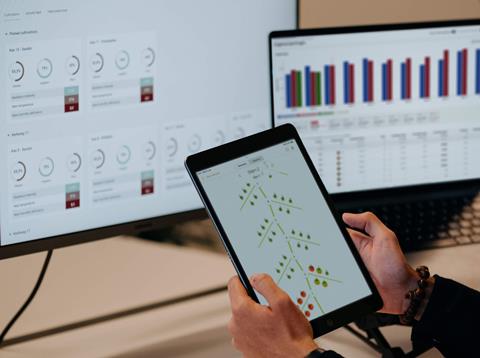
The vision is moving beyond static “best-guess” projections to a dynamic, high-frequency predictive model. Advanced AI and machine learning are now capable of analysing these variables to generate a constantly updated forecast of when, how much, and at what grade the produce will be ready.
This shift delivers actionable intelligence. It supports immediate operational decisions, such as detailing the packhouse manager’s exact labour requirements days ahead, while fundamentally providing the sales team with a reliable, data-backed volume commitment spanning the next four to eight weeks. The technology acts as a universal interpreter, enabling the entire organisation to operate from a single, shared source of truth.
The profitability of predictive planning
Predictive harvest forecasting is often framed as a sustainability tool – a way to reduce waste. While it delivers significant environmental benefits, its true power lies in its capacity to accelerate business growth and predictability.
Synchronisation allows the grower to optimise harvest timing not just by visual assessment, but by predictive data, favouring market demands. It transforms the sales team from reactive order-takers to strategic planners, enabling them to confidently enter forward contracts and explore new markets based on guaranteed supply volumes.
Ultimately, the future of post-harvest success will not be defined by the efficiency of sorting machines, but by the intelligence of the data driving the entire value chain. By closing the gap between production and commercial demand, the industry can unlock a new era of stability, profitability and truly sustainable growth.