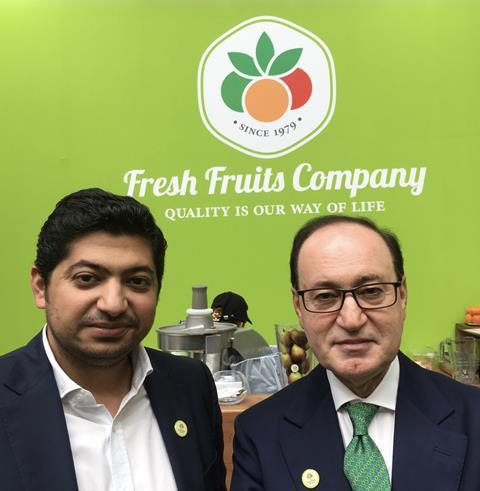
With the creation of the Foodstuffs, Fruit and Vegetable Market, set to be twice the size of the current market, Dubai is reinforcing its position as a world-class hub for fresh produce, according to Redha Mansouri, CEO of Fresh Fruits Company, and Hesam Rahi, CEO of Farzana Trading
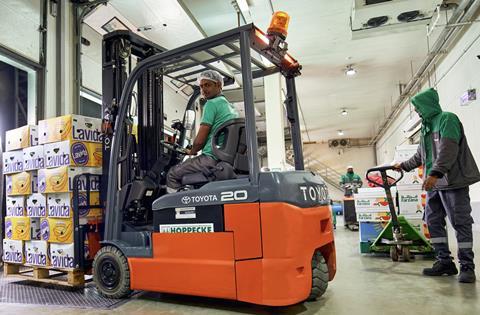
Last year, Dubai announced the development of the Foodstuffs, Fruit and Vegetable Market, set to be the largest such facility in the world and aimed at further enhancing the UAE’s attractiveness as a trade hub. Dubai Municipality and DP World have teamed up to develop the project, which will see the current size of Dubai’s fruit and vegetable market double and include links to global markets.
Fruitnet spoke to the CEOs of two of Dubai’s leading traders, Farzana Trading and Fresh Fruits Company (FFC), to get their views on the state of the Middle East market, the latest trends in fresh produce and the main challenges at present.
How is the market in the UAE and the Gulf more broadly at the moment?
Redha Mansouri, CEO of FFC: The region remains a strategically important and attractive market, where agile operators and strong partnerships are well positioned to drive sustainable, long-term growth. Higher production costs and freight volatility are encouraging closer collaboration between suppliers, importers and retailers. The Gulf market remains dynamic and resilient, supported by increasing health awareness and continued retail expansion across the region. Consumer demand remains strong, and the market continues to attract investment and innovation throughout the value chain.
Hesam Rahi, CEO of Farzana: With continued population growth in the UAE and increasing development across Gulf countries, we are seeing the overall size of the fresh produce sector expand. The UAE continues to play a central role as a regional hub, serving multiple markets thanks to its strategic location and world-class ports across the Emirates.
Has life in the market returned to normal after Covid-19? What’s changed?
RM: The pandemic has permanently reshaped consumer behaviour and market dynamics, particularly through accelerated digital adoption and the rapid growth of online and quick-commerce platforms offering fresh produce with very fast delivery times. At the policy level, the UAE government has increased its focus on food security and support for local agriculture, including investments in controlled-environment farming and initiatives to reduce import dependency for key products. These developments have created new opportunities for the fresh produce sector to align with national food security goals.
HR: At Farzana, we now supply substantial volumes to online businesses in addition to operating our own e-commerce channels. Another notable change is in fruit and vegetable packaging preferences. Today, more consumers – particularly the younger generation – favour pre-packed products for convenience, hygiene and portion control. This trend is shaping how we approach packaging, presentation and product offerings across our retail and online channels.
Can you tell us about some of the expectations for the new fresh produce market in Dubai?
RM: The development of the Dubai Food District, in partnership with DP World, will double the current market size and link it to global markets, reinforcing Dubai’s position as a world-class fresh food logistics hub. For FFC, this creates a positive environment. Better infrastructure, modern cold chain facilities and streamlined trade processes benefit established operators who can leverage scale and experience.
HR: We see this as a valuable opportunity to strengthen our position in the Dubai market even further. Dubai already has the most modern and efficient market in the region, and with its continuous growth and the development of more advanced facilities, it will remain unmatched and beyond reach.
Where are you currently seeing growth?
HR: Over the past few years, we have successfully expanded our direct-from-origin business at Farzana to multiple destination ports, and this segment has shown significant growth over the last three years. Today, we export to more than 30 countries worldwide. Driven by strong demand for our premium brand Lavida, we have seen encouraging growth from both existing and new markets. Our current presence covers the Gulf region, Central Asia, and East and North Africa. We are particularly pleased with the strong volumes achieved last year in MENA, supported by the growing recognition and acceptance of our Lavida brand.
RM: Growth has been particularly evident in neighbouring Gulf markets, where demand for high-quality, branded fresh produce continues to increase. Brands have always been at the core of FFC’s growth and identity. For more than 50 years, FFC has built long-term partnerships with some of the world’s most reputable fresh produce brands. Our portfolio includes Chiquita, Zespri, Jazz, Pink Lady and Envy. Frutia is our private label, used on products we supply for mainstream market segments. Hello Fruits is our consumer-facing brand for fresh juices and fresh-cut products, with kiosks within Carrefour hypermarkets strengthening our presence across the UAE.
What are the main products you’re importing? Are you looking at new sources?
RM: FFC manages a highly diversified portfolio, importing more than 500 fresh produce items year-round and sourcing from over 60 countries worldwide. Our core categories include bananas, pineapples, apples, citrus, kiwifruit, grapes, berries, leafy vegetables and tomatoes, alongside a wide range of specialty and niche items. Our strength lies in our ability to identify emerging origins and products at an early stage. Looking ahead, we continue to see strong potential in premium, value-added and specialty produce categories, as well as in origins that can offer consistency, quality and sustainability.
HR: In Farzana’s Fresh Division, we import more than 1,000 SKUs. Currently, we pack and supply more than 20 categories under the Lavida brand, including bananas, pineapples, avocados, onions, garlic, dragon fruit, coconuts and limes. A key milestone we achieved last year was securing an exclusive partnership with Madagascar to become the sole distributor of Madagascan lychees across the Middle East, Turkey and North Africa.
What are the main challenges you’re facing right now?
HR: One of the key challenges in the current market is the extended transit time caused by the Red Sea situation, which has mainly impacted shipments from Europe and South America. Longer transit times naturally increase the risk of quality variation and market volatility and can occasionally affect supply continuity. In addition, vessel delays and irregular arrival patterns – sometimes resulting in double or even triple weekly arrivals – create pressure on supply chain planning and inventory management.
On a broader level, climate change is increasingly influencing global agriculture. Extreme weather events are impacting growing regions and production cycles. Through diversified sourcing, strong supplier relationships and proactive planning, we aim to reduce risk and ensure consistent quality and availability for our customers.
RM: Sustainability is increasingly becoming a central issue in the fresh produce industry, driven by both environmental concerns and evolving consumer expectations. While price and quality remain key decision factors, there is growing awareness around responsible sourcing, food safety, packaging and waste reduction. Nearly all our products are GlobalGAP-certified, reflecting our commitment to quality, traceability and responsible sourcing across our portfolio.
Is Dubai reclaiming its role as the key hub for the region?
RM: Dubai never lost that role, but it is now reaffirming its position as a regional hub for fresh produce and as a primary regional logistics and re-export centre of excellence. While it is true that some neighbouring countries are increasingly importing certain items directly, Dubai’s strategic advantages remain unmatched. The emirate benefits from world-class port and airport infrastructure, highly efficient logistics networks, modern cold-chain and storage facilities, and a well-established trade and regulatory environment.
HR: In my opinion, Dubai’s position has not weakened. On the contrary, it continues to stand out as the leading hub in the region by a significant margin. Dubai offers unmatched connectivity to the Middle East, Africa, Central Asia and even Europe, which keeps it at the centre of regional and international trade flows.
Having been in the business a long time, are you confident you can weather the current storms?
HR: With decades of experience in the fresh produce business, we have successfully managed multiple market cycles, supply disruptions and industry changes. This experience has allowed us to build strong relationships with growers, suppliers and logistics partners across different origins, giving us flexibility and resilience when conditions change. Combined with our focus on diversified sourcing, disciplined risk management and continuous adaptation to market realities, Farzana is well positioned not only to weather the current challenges but also to identify new opportunities and drive sustainable growth.
RM: Over more than 50 years, FFC has experienced and overcome multiple industry, economic and geopolitical challenges, each of which has only strengthened the company’s resilience and long-term vision. Our history gives us confidence we can navigate the current challenges and continue growing into the future.
I was proud to be elected recently as chairman of the Dubai Fruit and Vegetables Business Group under Dubai Chambers. FFC has also developed The Fresh Market, a wholesale and office complex for traders in the fresh produce sector, located adjacent to the Dubai Fruits and Vegetable Market. This project was designed to complement the existing market, create employment opportunities and further strengthen Dubai’s position as a regional hub for fruit and vegetable trade.